CHERUBIM - PERFECT Knowledge is Theirs to Share!


The Cherubim is the second order or Choir in the First Hierarchal Sphere of the Hierarchy of Angels and they are part of the Heavenly Councelors.
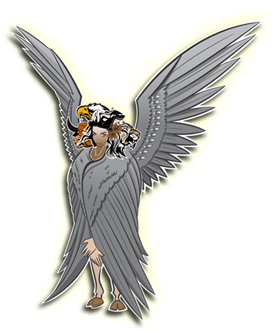

These hybrid, multi-faceted light beings appear nearly 100 times in the course of the Old Testament, as if to emphasize the significance of what they represent - they are the guardians of light, the stars and God's Throne.
They are also depicted on the Ark of the Covenant as its Guardians.
The concept of Cherubim is Assyrian or Acadian in origin; the Acadian word "karibu" means "one who prays" or "intercedes".
Their rank among angels is uncertain but they are always categorized in the First Hierarchal Sphere normally after the Seraphim.
Some believe them to be an order or class of angels; others hold them to be a class of heavenly beings higher than angels.
They Have the "Perfect Knowledge of God"...
These magnificent beings are said to have perfect knowledge of God, surpassed only by the love of the Seraphim.
They are considered the elect beings for the purpose of protection.
Cherubs are the first Angels mentioned in the Bible when two Cherubs are placed by God to guard the gates to Eden with Flaming Swords.
"He drove out the man; and at the east of the Garden of Eden he placed the Cherubim, and a Flaming Sword which turned every way, to guard the way to the Tree of Life." Genesis 3:24.
They were also known as the record keepers of Heaven.
Their Four Faces... Human, Lion, Ox and Eagle...
They were not described as the cute little "cupid-like" angels depicted by painters, but instead as having four appearances: that of a human, ox, lion, and eagle.
According to the Cabalists the human face is said to be symbolic of Divine Man, the face of the eagle is symbolic of the World of Creation; the element of air, the lion face, represents the World of Formation and the bulls features corresponds to the World of Action and the element of earth.
It is believed that, although they are removed from mans plane of reality, the divine light that they filter down from Heaven still touches the lives of living things.
ANGEL SHARE - Share your Angel story, experience or Angel Ritual with us!
or maybe you would like to comment on this page or about the Angels.
Discover and learn just how powerful Angel Healing can be when working with the powerful Archangels in this "Way of the Archangels Course"
Your "Like" & "Vote" would really be appreciated.
Join the HJE Healing Community!
This website is for you and others like you who have a desire to be a part of the natural way to heal.
I am sure you too have found a lot of valuable insights into energy healing and by sharing our knowledge we get to help one another.
This web site is a collation of my knowledge spread over more than 400 pages but I know that there is a lot more information and success stories out there and I would just love to hear about them.
I'd love to receive any articles, photos, stories, reviews, or other content you'd like to share.
Share Your Energy Healing Experience by submitting it right here on this site, then site visitors can read, rate, and comment about it. See an example of how this works with an interesting story of what happend to me about perfection.
You can also share or comment on any page of this website, just see the "Share this page" and "Leave a Comment" options at the very bottom!
Please join me as we develop and grow this fun Healing Community.

There's also an active group of fans on my Healing Journeys Energy Facebook Page so come join the conversation, we'd love to have you with us!

I recently started a Pinterest page with tons of boards to follow!

Of course I am available on Twitter and would love to see your tweets!





Comments
Have your say about what you just read! Leave me a comment in the box below.