What are Essential Oils


What are Essential Oils... they are odorous pure plant essences and each one is extracted from a single botanical source via a number of different methods.
Almost all essential oils are antiseptic and antibacterial, antiviral or antifungal.
Aromatherapy Oils are categorized by their smell, into a class of notes, high, middle or low and should be mixed with the same note, so the aromas do not clash and overpower each other.
Some oils will stimulate and regenerate while others will sedate and calm the mind and body.
What are Essential Oils... the are pure and therefor they shouldn't be used undiluted on the skin as they may cause irritation, I would recommend that you use cold pressed vegetable oils such as almond, sunflower and walnut as a carrier.
Aromatherapy oils are diverse and some have various healing properties.
Lavender for instance has over 70 different healing properties. It can be used to help children sleep, as it relaxes the mind and has a calming effect. It can bring down temperatures, has cell rejuvenating properties, helps with cuts and burns, and smells wonderful.

- What are Essential Oils Pharmacological Effects
- Oils you cannot do without
- Stress Busters
- Benefits - Aromatherapy Oils
- Caution - Essential Oils
- Tips - Aromatherapy Oils
What are Essential Oils Pharmacological Effects
- antibacterial in-vitro testing has confirmed antibacterial effects in certain oils including rosemary, clove, lime, cinnamon and tea tree oil
- antiviral supported for tee tree oil, lemongrass, sandalwood, peppermint, ginger, thyme, hyssop in in-vitro testing against Herpes
- antifungal
- anti-inflammatory supported by in-vitro testing for lavender, thyme, clove, juniper and tea tree
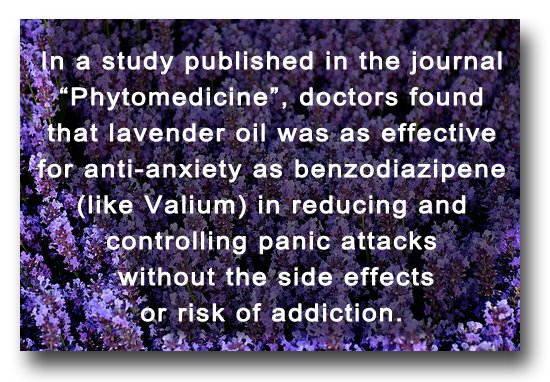
- anxiolytic (anxiety relieving)
- antispasmodic (relieve or prevent spasms)
- invigorating
- antioxidant
The three Essential Oils you cannot do without . . .
 Reminder
In my Own Your Health Course I teach you exactly how to use these oils for self-healing or even healing others.
Everybody should keep lavender, tea-tree and peppermint oil in their home, as you can use them for so many things.
- Lavender - is an anti-bacterial, as well as a calmative, you can also put a drop of lavender oil on the back of your dog's neck, and brush it in to keep the fleas away..
- Tea-tree - can be used as an anti-septic.
- Peppermint - is good for clearing the passages when you have a cold or if you suffer from sinusitis. Peppermint is excellent for cuts, and drawing the heat out of a wound or sprain.
NB: Do not use homeopathic medication in conjunction with peppermint oil, as it takes away the effectiveness of the homeopathic medication.
What are Essential Oils Stress Busters
Mental
|
Body
|
Benefits of Aromatherapy & Essential Oils
- Enhances current well-being
- Aids in improvement of health
- Works with emotions (for balance and well-being)
- Spiritual Guidance
- Purification of Environment
- Aid in boosting immune, respiratory, circulatory systems
What are Essential Oils Cautions...
- Always seek professional help with serious health problems
- Do NOT apply directly to skin (unless oil has been specified as safe or has been diluted in carrier oil
- Do NOT take internally
- Do NOT use if pregnant, nursing, on children under age 2, or with serious health problems without consulting a professional
- More is NOT Better
Tips
- Instead of using a roll-on deodorant, an oil mixture can be made up, so as not to clog pores and the lymph nodes, which clean the body.
- Instead of a cream-based moisturizer, an oil blend of your favorite fragrances can be made up in a carrier oil for deep and natural moisterization.
- Soak in the bath with lavender oil, as it has everything in it and with so many properties. For a woman, add sandalwood, for men, add ylang ylang.
Your "Like" & "Vote" would really be appreciated.
Join the HJE Healing Community!
This website is for you and others like you who have a desire to be a part of the natural way to heal.
I am sure you too have found a lot of valuable insights into energy healing and by sharing our knowledge we get to help one another.
This web site is a collation of my knowledge spread over more than 400 pages but I know that there is a lot more information and success stories out there and I would just love to hear about them.
I'd love to receive any articles, photos, stories, reviews, or other content you'd like to share.
Share Your Energy Healing Experience by submitting it right here on this site, then site visitors can read, rate, and comment about it. See an example of how this works with an interesting story of what happend to me about perfection.
You can also share or comment on any page of this website, just see the "Share this page" and "Leave a Comment" options at the very bottom!
Please join me as we develop and grow this fun Healing Community.

There's also an active group of fans on my Healing Journeys Energy Facebook Page so come join the conversation, we'd love to have you with us!

I recently started a Pinterest page with tons of boards to follow!

Of course I am available on Twitter and would love to see your tweets!





Comments
Have your say about what you just read! Leave me a comment in the box below.