How Aromatherapy Works


How aromatherapy works is that Essential Oils are a key aspect to this healing art and can be used in three ways, through inhalation, topically and orally (only under experienced medical supervision, SOME OILS CAN BE TOXIC).
It works on both physical and nonphysical levels, holistically, addressing the physical body, mind and soul by linking physical, mental, and emotional levels of concern. It actually works best when it is used by the mind and body simultaneously working subtly, through the senses as you absorb impressions. It targets different neuro-chemicals in the brain, to lift up, stimulate, sedate or create euphoria.
However the most well known way it works is through smell, because of the influence of aroma on the brain, especially the limbic system, the part of the brain that controls our moods, emotions, memory and learning, through the olfactory system.
"Nothing can cure the soul but the senses, just as nothing can cure the sensesbut the soul." ~Oscar Wilde~
How aromatherapy works is that the Essential oils stimulate our powerful sense of smell which is a primordial link to our brains. We have the capability to distinguish 10,000 different smells and it is also well known that smells have a significant impact on how we feel.
How aromatherapy works is that as scents are inhaled, the smell travels across the olfactory nerves located inside the nose and then up into the part of the brain that controls our moods, our memories and our ability to learn. This area is called the limbic system and when stimulated it releases endorphins, neurotransmitters and other "feel-good" chemicals.
Certain studies involving brain wave frequency indicated for instance that smelling lavender increases alpha waves in the back of the head, which are associated with relaxation and the fragrance of jasmine increases beta waves in the front of the head, which are associated with a more alert state.
Now that you know how aromatherapy works, imagine for a moment what life would be like without fragrance.
Doctors have found, when dealing with patients with anosmia that a life without fragrance can lead to high incidence of psychiatric problems such as anxiety and depression.
An interesting fact is that two million Americans experience anosmia, which is the absence of the sense of smell by damage to olfactory nasal tissue or the olfactory nerve or by obstruction of the nasal passages. Can you but imagine how your life would change if you suddenly lost your sense of smell? You would find yourself bereft and cast adrift without the internal sextant of scent.
However, how Aromatherapy works is a vast subject and is not about the smell alone.
 Reminder
In my Own Your Health Course I teach you exactly how to use these amazing healing oils for self-healing or healing others. Information well worth knowing.
Aromatherapy also works by absorbing the essential oils that have been extracted from plants, fruits, herbs and flowers into the blood stream through the skin.
When an aromatic essential oil (diluted) permeates our skin through the bath or a massage, it activates thermal receptors, killing microbes and fungi.
How aromatherapy works is that when the oil penetrates the epidermis, it also stimulates our sophisticated lymph duct system, and enters the bloodstream, eventually delivering well-being to our frayed and frazzled minds.
This method is perfectly safe and if you've ever rubbed a fragrant lotion, cream or ointment into your skin or received an aromatherapy massage, you've already indulged in a form of aromatherapy.
Scientific studies have established that essential oils used in aromatherapy contain chemical components that can exert certain specific effects on the mind and body. Their chemistry is complex, but generally includes alcohols, esters, ketones, aldehydes, and terpenes. See the Applications Table here.
Related Video
Aromatherapy Methods of Application Table
| METHOD | PROCEDURE | DOSAGE | BENEFITS |
|---|---|---|---|
| Massage | Use a massage couch and cover the patient with towels, exposing areas one at a time. Massage for up to 90 minutes | 7-10 drops (1.5- 2%) in 25ml (1 fl oz) of carrier oil, for a complete massage (adult dose) | Benefits physical and psychological problems. Good for muscular fatigue and aching, nervous tension, and anxiety |
| Ointments and creams | Ointments and creams | 5-20 drops (0.5-2%) in a 50g (2 oz) jar or tub | Higher dose of 2% may be applied to bruises, sprains, painful joints, and the chest and back for respiratory ailments. Lower dose of 0.5% is for sensitive or inflamed skin |
| Compress | Add essential oil to a bowl of either hot or cold water. Place a cloth on the water and wring out. Apply to affected area for 5 minutes. Repeat 2-4 times | 3-5 drops in a 600mls (one pint) bowl of water | Hot compresses are suitable for cold conditions characterized by a fixed, cramping pain, worse in cold weather. Cold ones are for hot, swollen conditions, and pain of a "burning" nature |
| Steam Inhalation | Add essential oil to a bowl of boiled water. Draping a towel over the head, breathe in the steam for 1-2 minutes only. Repeat 2-4 times | 2-3 drops in a 600mls (one pint) bowl of water | Effective for respiratory complaints, including: bronchial and sinus congestion; coughs and bronchitis; and sore throats, colds, and influenza |
| Bath | Add essential oil to very warm bath water, vigorously stirring in the drops to ensure full and safe dispersal. Allow time for a good, relaxing soak | 4-6 drops (adult) 3-5 drops (13-16yrsS 2-4 drops (10-12yrs) 1-3 drops (7-9 yrs) 1-2 drops (4-6yrs) 1 drop (under 3yrs) | The ultimate way to relax. Especially beneficial for nervous tension and tired, sore muscles. For insomnia, bathe in oils such as lavender, orange, and chamomile before going to bed |
| Vaporization | Add essential oil to a burner (containing water), or a dish of water that can be safely warmed. Or use an electric nebulise (without water) | 5-20 drops in a burner or dish; 20-200 drops in a nebuliser | A burner is best employed for the psychotherapeutic purposes of mood enhancement and upliftment. A nebuliser is preferable for disinfecting the air and to improve breathing |
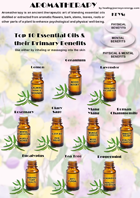
| Aromatherapy Chart Aromatherapy is an alternative healing modality that can be used for the whole family. This is a great reminder chart of the 10 must have essential oils for the family and what to use them for. |
 $1.75 $1.75 |
Your "Like" & "Vote" would really be appreciated.
Join the HJE Healing Community!
This website is for you and others like you who have a desire to be a part of the natural way to heal.
I am sure you too have found a lot of valuable insights into energy healing and by sharing our knowledge we get to help one another.
This web site is a collation of my knowledge spread over more than 400 pages but I know that there is a lot more information and success stories out there and I would just love to hear about them.
I'd love to receive any articles, photos, stories, reviews, or other content you'd like to share.
Share Your Energy Healing Experience by submitting it right here on this site, then site visitors can read, rate, and comment about it. See an example of how this works with an interesting story of what happend to me about perfection.
You can also share or comment on any page of this website, just see the "Share this page" and "Leave a Comment" options at the very bottom!
Please join me as we develop and grow this fun Healing Community.

There's also an active group of fans on my Healing Journeys Energy Facebook Page so come join the conversation, we'd love to have you with us!

I recently started a Pinterest page with tons of boards to follow!

Of course I am available on Twitter and would love to see your tweets!





Comments
Have your say about what you just read! Leave me a comment in the box below.